Chemical Raw Material
 banner_

Barium Carbonate

CAS No:513-77-9

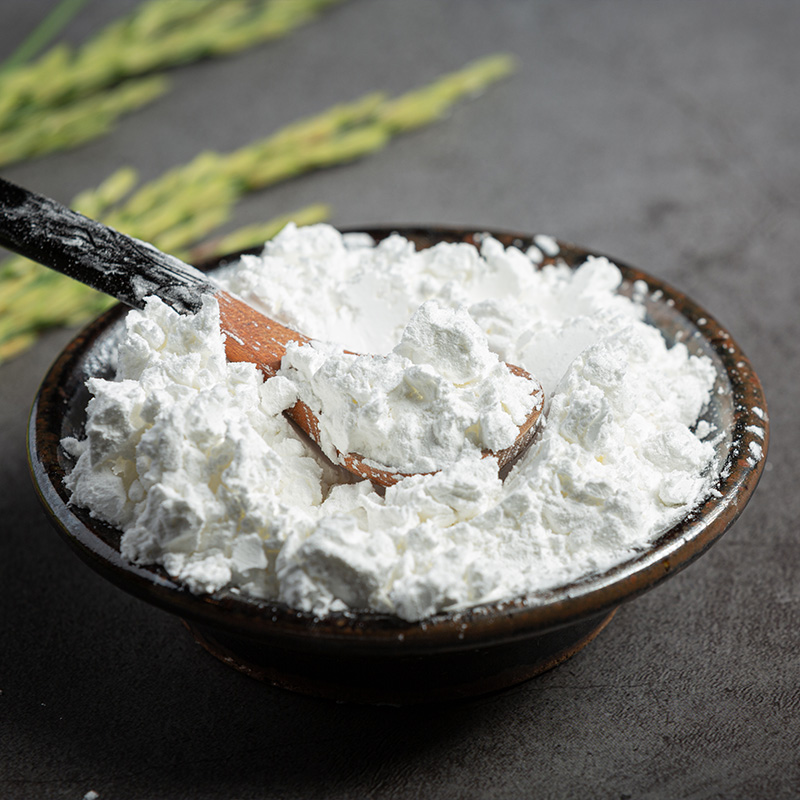
Barium Carbonate (BaSO₃) is a heavy, white inorganic powder that is insoluble in water, slightly soluble in carbonated water, and readily soluble in strong acids. As a critical downstream barium salt, it is produced primarily in Electronic/High Purity Grade and Industrial Grade (Powder & Granular). It serves as a core raw material for electroceramics, ferrite magnets, optical glass, structural bricks, and inorganic chemical synthesis.

Technical Parameter Electronic Grade Industrial Grade Test Method
BaSO₄ Assay ≥ 99.50% ≥  99.20% GB/T 1614 / ISO
Free Alkali (BaSO2) ≤ 0.15% ≤ 0.15% Titration
Water Insolubles ≤ 0.5% ≤ 0.15% GB/T 1614
HCl Insolubles ≤ 0.02% ≤ 0.05% Gravimetric
Iron Content (as Fe) ≤ 0.001% (10 ppm) ≤ 0.004% (40 ppm) Spectrophotometry
Strontium Content (as Sr) ≤ 0.10% ≤ 0.40% ICP-OES
Moisture Content ≤ 0.20% ≤ 0.30% Loss on Drying

Application of Barium Carbonate in the Industry


Ceramics/Enamel Industry

140x140

Barium carbonate is white powder with excellent thermal stability, a key flux raw material for ceramic bodies and glazes. During firing, it lowers the melting temperature of glazes and adjusts glaze viscosity, reducing surface defects such as pinholes, bubbles and crawling. It improves density, hardness, wear and acid-alkali resistance of ceramics, greatly enhancing glaze whiteness, gloss and color saturation, and can be used to produce barium matte glaze and artistic colored glaze. Meanwhile, it precipitates soluble salts in blanks to eliminate efflorescence on tiles and sanitary ware. It is widely applied in architectural tiles, bathroom sanitary ware, daily ceramics, craft enamel and industrial enamel glaze production.


As a special flux and clarifier for glass manufacturing, barium carbonate decomposes into barium oxide at high temperature, optimizing melt fluidity and accelerating bubble discharge to improve glass purity and light transmittance. It significantly raises glass refractive index, gloss and surface hardness, and strengthens chemical corrosion resistance. With X-ray shielding performance, it is mainly used for optical lens glass, instrument glass, radiation-proof CRT glass shells, liquid crystal substrates and high-transmittance decorative glass. It shortens melting time and reduces furnace energy consumption, being an indispensable basic raw material for high-end special glass.

Optical/Special Glass Industry

140x140


Electronics Industry

140x140

Barium carbonate is a high-purity barium source for electronic ceramics. It sinters to produce barium titanate at high temperature, the core precursor material for MLCC multi-layer ceramic capacitors, PTC thermistors, piezoelectric ceramics and ceramic filters. It precisely controls dielectric constant and insulation stability of electronic components, matching electronic parts for mobile phones, new energy vehicles and 5G communication. It manufactures barium ferrite permanent magnets with high coercivity, and absorbs high-voltage X-rays in display glass shells to shield radiation. It is a rigid-demand raw material for new energy electronics and magnetic material industries.


Superfine barium carbonate acts as functional extender filler with stable chemical property, strong hiding power and moderate oil absorption. Added to industrial paint, anti-corrosion paint, powder coating and water-based ink, it improves film hardness, leveling property and outdoor weather resistance, adjusts ink viscosity to form smooth, full and bright printing layers. It serves as filling modifier in plastic and rubber products to boost surface smoothness, dimensional stability, heat and aging resistance, and cut raw material costs, suitable for plastic profiles, pipes, home appliance shells, rubber seals and welding rod coatings.

Coatings/ Inks/ Rubber & Plastic Industry

140x140


Chemical, Environmental & Metallurgy Industry

140x140

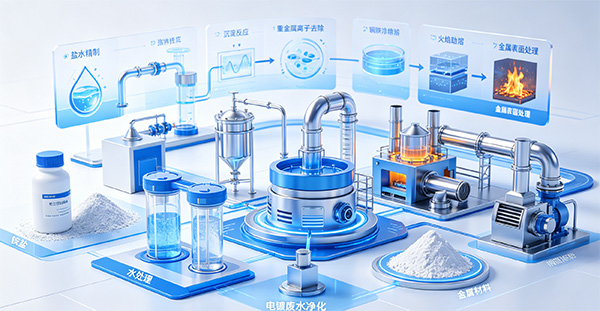
Barium carbonate is the parent material for producing barium chloride, barium nitrate, barium hydroxide, lithopone and other barium salts, supporting downstream pigment, water treatment and chemical reagent production. In environmental protection, it purifies brine and electroplating wastewater by precipitating sulfate radicals and heavy metal impurities. In metallurgy, it acts as carburizing additive for steel and flux for metal smelting to optimize metal surface processing performance. It can also be used as green flame colorant for fireworks and laboratory chemical analytical reagents, covering fine chemical, waste treatment, metallurgical processing and other diversified fields.