
The fluctuation of PET prices affects downstream nerves, and cost pressure is being transmitted along the industry chain
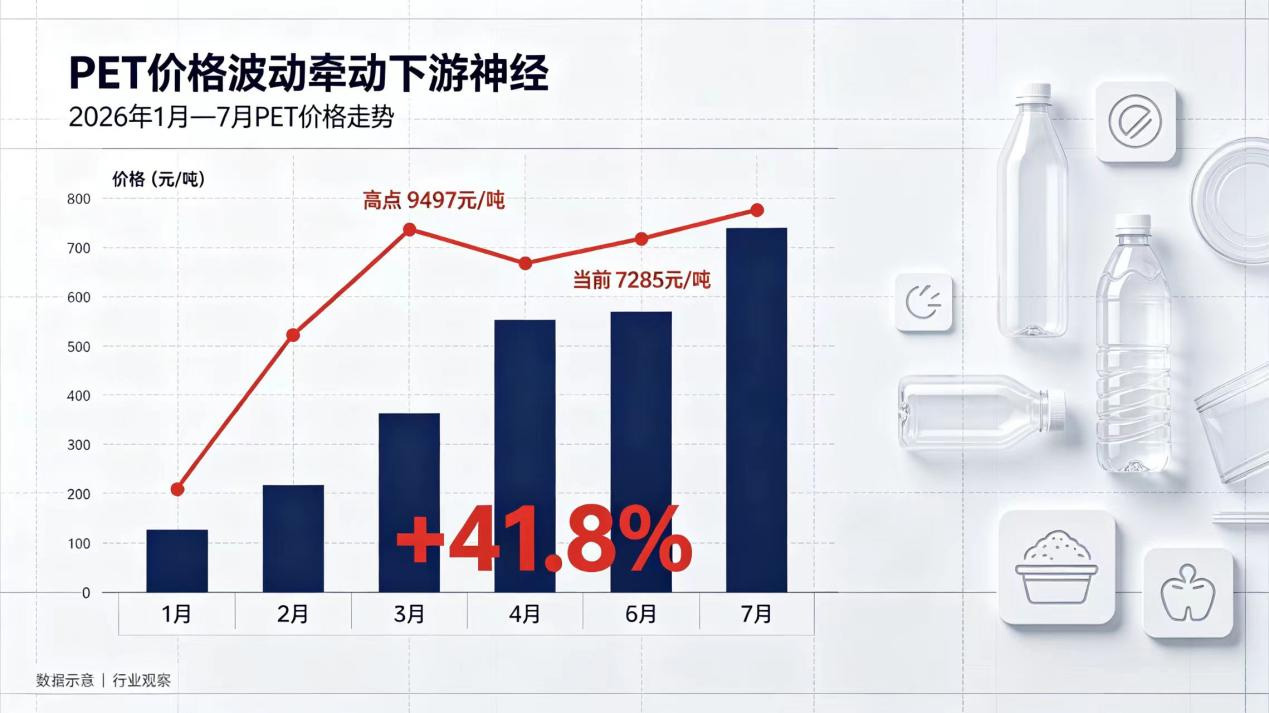
Since 2026, international crude oil prices have continued to rise due to factors such as geopolitical conflicts, leading to a significant increase in the cost of PET core raw materials. As of April 2026, the cumulative increase in spot prices of domestic water bottle grade polyester bottle chips has exceeded 40%, and the mainstream quotation has risen from about 6300 yuan/ton at the beginning of the year to around 9000 yuan/ton. This round of price increases has been transmitted to the end consumer goods sector - beverage companies such as Wahaha and China Resources Yibao will raise the supply price of purified water from July 2026, clearly pointing the reason to the increase in PET packaging material costs. The industry estimates that PET costs generally account for 20% to 32% of beverage companies.
From a global perspective, the supply chain obstruction caused by the tense situation in the Middle East has also led to a price increase of about 15% to 40% for PET materials in countries such as Malaysia. Some dairy companies have turned to alternative packaging such as paper boxes to control costs. The cost impact is being transmitted layer by layer along the chain from crude oil to petrochemical raw materials, and then to consumer goods terminals, highlighting the importance of upstream PET price stability for downstream industries.
Industry trend: The transmission effect of international oil price fluctuations on PET prices is continuing to emerge. Enterprises with integrated production capacity layout and the ability to effectively stabilize raw material cost fluctuations will have greater initiative in foreign trade competition.